
Fixing the Turn on Municipal and Daily-Fee Courses

The back nine on a busy public course rarely falls apart on the first tee. It falls apart at the turn, when a group waits at the halfway house, the 10th tee loses its gap, and every group behind inherits the loss. This guide is for municipal course operators, head professionals, and general managers running daily-fee play on high volume weekends.
Why the turn, not the first tee, is where intervals die
The first tee has a starter watching the clock. The turn usually does not.
A group finishes the 9th, stops for a bathroom break or a hot dog, and takes far longer than the staff assumed. The group behind them closes in while they wait. By the time both groups tee off on 10, they are leaving closer together than they arrived, and the gap that took all morning to build has been erased at the turn. Repeat that through a busy morning and the back nine is playing a round the front nine avoided.
This is the same operator problem we cover in Why a Predictable Four-Hour Round Is Worth Marketing (and How to Sell It on Your Website). A predictable round depends on holding the interval at every choke point, not just the first one.
What to measure: interval into 9, interval off 10, dwell time at the halfway house
Most courses track one number: the interval off the first tee. That number tells you nothing about the turn.
Track three numbers instead. The interval a group arrives at the 9th green. The interval that same group tees off on 10. The dwell time between those two events. When the gap leaving 10 is smaller than the gap arriving at 9, the turn consumed the difference, and every group behind pays for it on the back nine. Log those three numbers for a full weekend morning and you will have your own course's turn profile instead of an opinion about it.
You do not have to measure this by hand
Getting those three numbers has usually meant a clipboard, a stopwatch, and someone standing near the halfway house making notes, on top of running the outing, the beverage cart, and the pro shop.
On-cart precision GPS records the timestamp when a group's cart reaches the 9th green, the timestamp when it tees off 10, and the dwell time between the two, automatically, for every group, every day. Nobody has to stand at the turn with a watch. It arrives as a report you can pull Monday morning instead of a task someone has to remember to do on Saturday. That does not fix everything by itself. It just means the numbers exist without costing staff time to collect.
What we can shorten at the turn, and what we cannot
Nothing on a cart screen shortens a bathroom break, and nothing shortens how long a group decides to linger at the halfway house talking. That part of the turn is a people problem, and it stays a people problem.
What can be compressed is the food and beverage part of the turn, because that part is mostly a queue. Cart screens let players place their food and beverage order from the cart while they are still finishing the front nine, so the order is being prepared while they play 7, 8, and 9, and it is ready when they arrive at the halfway house instead of them arriving and then waiting for it to be made. The turn does not get shorter because the group moves faster. It gets shorter because ordering and waiting, which used to happen in sequence, now overlap with golf that was already going to happen anyway.
That is a narrow claim, and it is worth keeping it narrow. It does not touch bathroom breaks, and it does not touch a group that wants to sit and visit at the turn regardless of whether their food is ready. It touches the specific minutes a group spends standing at a counter waiting on an order that has not started yet.
Writing a turn standard your staff can actually follow
A verbal expectation is not a standard. Write down a maximum dwell time at the halfway house, post it where staff can see it, and hold the same number every day, not just on tournament days.
Keep it short. One number for maximum dwell time. One number for the interval staff are protecting off 10. One name for who enforces it. Anything longer than that will not survive a Saturday morning.
Who owns the restart: naming one person per shift instead of hoping a ranger catches it
A ranger driving the back nine cannot also stand at the turn watching the clock. Something has to give, and on most courses it is the turn.
Name one person per shift who owns the restart at 10, the same way one person owns the first tee. That person's only job during the turn window is holding the gap. Everything else waits.
We covered the staffing side of this in The End of the Driving-Around-Looking-for-Slow-Play Ranger. The same logic applies at the turn: a person driving around looking for a problem finds it too late to fix it.
Handling outings, food and beverage stops, and double tee days at the turn
Outings and double tee starts put extra load exactly where the turn is already thin. A halfway house stop that moves quickly on a quiet Tuesday stalls when two large groups converge on it at once, and nobody on staff has been told which of the two gets sent out first.
On outing and double tee days, treat the turn like a second starter station. Staff it the same way you staff the first tee, with someone watching arrivals and departures, not just someone selling hot dogs.
What precision GPS interval data shows that a ranger in a cart cannot
A ranger sees one group at a time, from one vantage, and only when the cart happens to be there. On-cart precision GPS sees every group, at 9 and at 10, continuously, and it keeps the record afterward so the pattern is reviewable on Monday.
Standard GPS drifts 6 to 16 feet. A cart path is 8 to 10 feet wide. That drift is why consumer-grade location data cannot reliably tell you which hole a cart is on, let alone how long it dwelled at the turn. Precision GPS built on RTK corrections is a different measurement category, accurate enough to place a cart on the correct hole and time its dwell there. We go through the physics in What Is Precision GPS (RTK) and Why Golf Courses Care?
Most operators treat the turn as a staffing problem. It is usually a visibility problem first, because staff cannot protect an interval they cannot see closing.
What to do this week
- Pull last Saturday's tee sheet and mark the actual times groups teed off on 10, not the scheduled times.
- Compare those times to the interval the same groups had leaving the 9th green.
- Write a one-page turn standard: maximum dwell time, protected interval off 10, name of the person who owns it.
- Assign that ownership by shift for the next two weekends and check whether the gap holds.
- Read The Hidden Capacity Audit for Your Tee Sheet to see whether turn congestion is quietly capping how many tee times you can sell on your busiest days.
If you're building the case for your council or committee
Municipal courses answer to a council or parks department. Daily-fee operators answer to ownership. Either way, the case for fixing the turn is a business case, not a pilot.
Any vendor comparison for pace-of-play or GPS technology should require a written, contractual GPS accuracy guarantee, with a number and a test method. Verbal assurances do not count.
Win one champion first, whether that is a course superintendent, a parks director, or a head professional who already feels the turn problem. Let that person talk to peer references at other municipal courses before anything goes to a vote. A vendor can help organize your existing labor and pace records into that business case; with the AI tools available now, that part is fast.
Where FAIRWAYiQ fits
FAIRWAYiQ is an independent GPS provider, built for any cart brand, with 11 years serving golf courses. Our on-cart precision GPS measures group-by-group intervals at the 9th and 10th automatically, so the turn gap is visible as it forms instead of after the back nine is already backed up, and nobody on staff has to collect that data by hand. Courses using this typically see labor savings of about $14,000 a year without cutting staff, and $40,000 or more a year when a course eliminates a dedicated ranger role and repurposes junior golf professional staff onto the interactions technology can't handle.
If you want to see the interval data for your own turn, book a call with Mike.
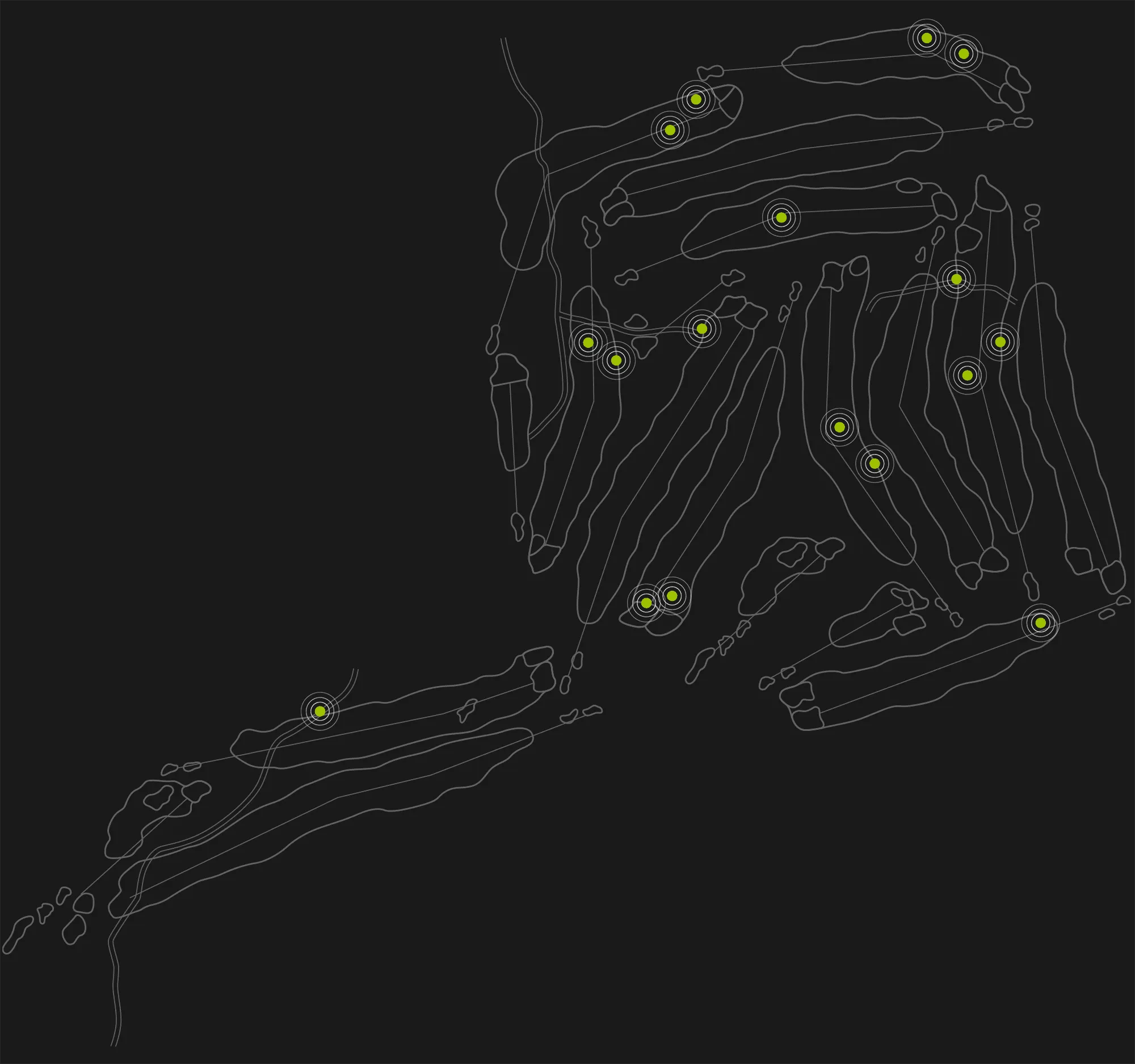
Revolutionize Your Golf Operations with FAIRWAYiQ
Unlock the power of data analytics to optimize your golf course management