

GPS for golf carts and caddies.
FAIRWAYiQ speeds up pace, protects turf and drives new revenue. Built to work every round, and backed by people who answer when you call.
Courses and communities that run FAIRWAYiQ.























The financials, built on the foundation.
Estimated annual facility impact. Protected turf, staff time and advertising revenue all rest on solid pace of play.
Cart traffic that stays off the grass you are protecting.
A cart with a rider weighs 1,150 lbs. With centimeter-level precision, geofences fire when they should, and players comply.
Depends on the course. Modeled from GCSAA and USGA data.
Less time on blind cart patrol.
Average $22K a year, as the marshal role shifts from patrolling to player services.
Conservative labor estimate.
The Cart Screen as a digital ad surface.
Customers are generating ad revenue today, an average $15K a year per facility. That revenue goes to the course as incremental margin.
From live customer advertising revenue.
All built on the foundation:
Solid pace of play, and a premium player experience.
USGA research found that, on average, golfers would pay 9.1% more in green fees for a faster pace of play.
That kind of day on the course also supports a more valuable round, players who come back, and at clubs, members who keep joining.
Average $118Kmore green-fee revenue a year, on a typical U.S. busy season.
How we calculate this
An average 18-hole U.S. course plays 113 rounds on a busy-season day. The National Golf Foundation treats May through September (153 days) as peak season, accounting for about 55% of annual U.S. rounds. The NGF / Golf Datatech 2025 standard is 31,300 rounds a year per 18 holes, so 31,300 × 55% ÷ 153 = 113 rounds a day. A $75 average green fee (an example for this math) × 9.1% × 113 rounds × 153 days = $117,997, shown as Average $118K. Sources: NGF, "Rounds Roundup: Weather-Related Risers and Fallers," May 4, 2023; NGF / Golf Datatech 2025 rounds standard cited in the NGF Bastrop GC feasibility report. Read the USGA article. Supporting PDF: USGA / GGA Financial Impact Study.
Run your custom return on investment for your course.
Estimated return of about 8x to 11x on Cart Screens, from 3-year to 6-year pricing. Calculate yours.
Based on the four values above ($230K) against 70 Cart Screens at $425 (3-year) and $290 (6-year) per cart per year.
FAIRWAYiQ products.
Precision GPS™ is the first Precision GPS™ for golf carts, launched in Q4 2025, and an add-on to Cart Screens, not the whole platform.
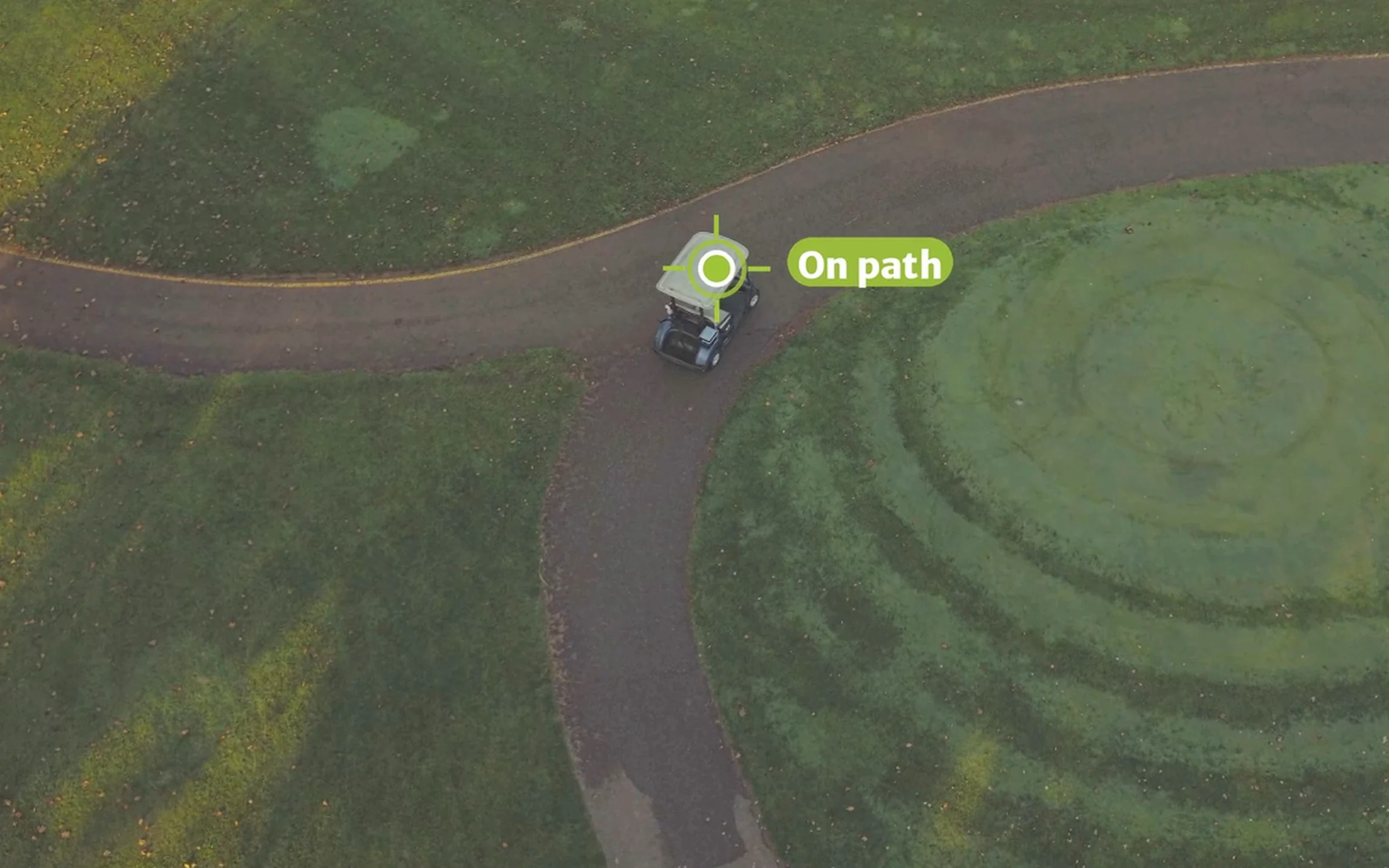
Protect the Turf
Geofences that can sit close to the edge of the path, so cart path only means the path. Built for the superintendent and the golf shop.
See Protect the Turf →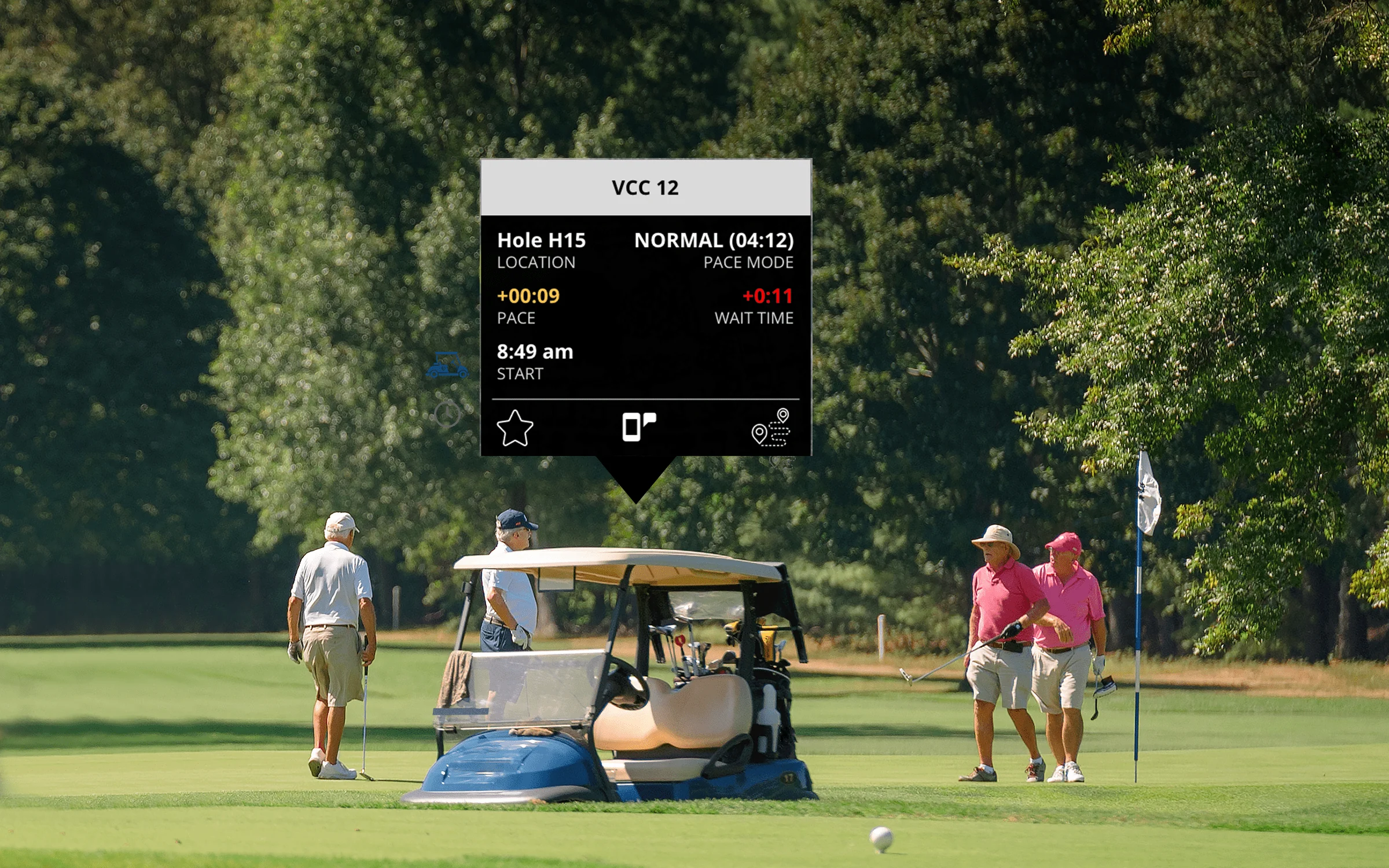
Proactive Pace of Play Management
See a backup before it cascades. A measured 15-minute improvement in round time, and fewer awkward conversations on the course.
See Pace of Play →
Advertising
Local businesses buy space on your Cart Screens. The course keeps 100% of the ads it sells, and the toolkit to sell them is free.
See Advertising →Drive the cart. Then flip the switch.
Watch standard GPS wander off the path, then see what changes with Precision GPS™. Open the interactive Try it on the Precision GPS™ page and drive it yourself.
The same system, valued from each seat.
Golf professional staff, superintendents, and GMs and owners all run on it. The value just shows up in a different place.
A real-time view of the course, so you spend time on the group that is actually behind, not the one the radio mentioned.
When an alert or a slow-play notice is right, players take it seriously.
Monitor from the shop, send a message, and roll only when it matters.
Estimated up to $75K a year in protected turf, depending on the course.
After rain, the geofence can sit close to the edge of the path.
Fewer ruts to repair, and fewer signs to pick up and cut around.
A measured 15-minute improvement, and Average $118K more green-fee revenue a year, on a typical U.S. busy season.
Average $22K a year, as the marshal role shifts from patrolling to player services.
Protected turf, staff time, advertising revenue and pace of play add up differently at every course. Run the ROI calculator to see yours.
Reliable hardware. Service in writing. A way out if we do not fix it.
Courses are used to systems they have to fight. This is the opposite of that.
Built to work every round.
That goes for Precision GPS™ and for the hardware it runs on. The point is a system your staff does not have to babysit, and does not end up doing the vendor's work.
Agreed in writing.
Service levels, and Precision GPS™ accuracy, are agreed in writing. Few GPS companies put that in writing. We guarantee our GPS accuracy in writing. Ask your GPS provider to do the same.
We fix it, or you can cancel.
If we fail our contractual obligations, you tell us, and we have the right to fix it. If we do not fix it, you can cancel.
Hear it straight from our customers.
 Reedsburg Country Club
A switch story, from the Head PGA Professional.
“How this has impacted our staff is we've had to provide less staffing with rangering. So we've been able to monitor the system from the pro shop, send out messaging, and that's one of the great things about the system.”
Bob FellerHead PGA Professional, Reedsburg Country Club
This video has sound. Use the player controls to set the volume or unmute.
 New England Country Club
Hear it from the Director of Golf Operations.
“I've had the opportunity to use two other different GPS providers, but the FAIRWAYiQ Precision GPS™ has really made a big difference here at New England Country Club.”
Mike DaronDirector of Golf Operations, New England Country Club
On the way to the self‑managing golf course.
A US-based team, in business for 11+ years, serving golf courses across the Americas.