
Running the Last Tee Times as Daylight Shrinks
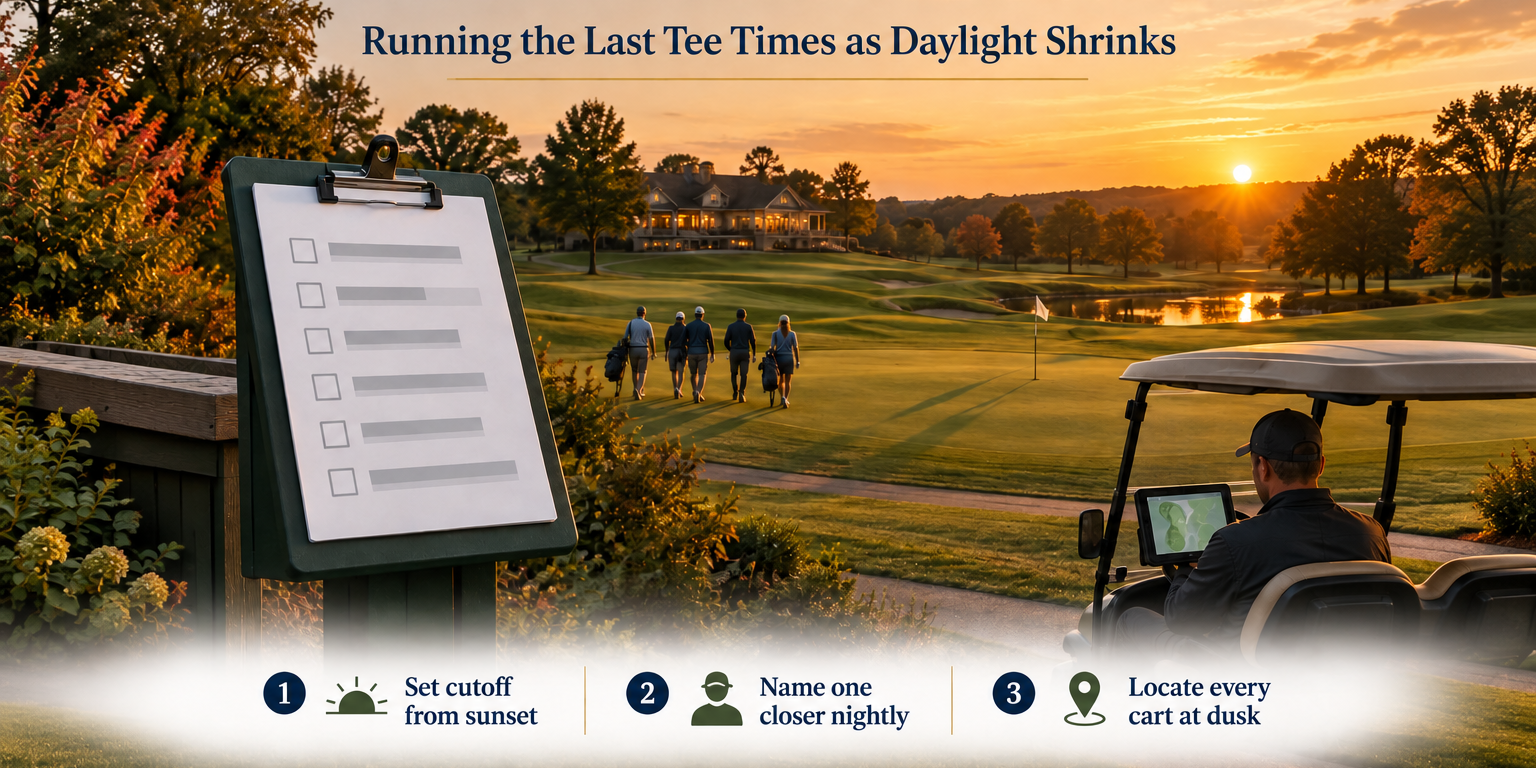
The last group off the tee still expects to finish. The last cart still has to come back. And the shop still has to close, whether or not anyone knows who is left on the back nine. At municipal and daily-fee courses, the tee sheet built in July does not adjust itself when the sun starts setting earlier, and the gap shows up every evening in the fall.
Why the end of the day breaks first in the fall
Many public and daily-fee courses close out the evening with a small crew, often a starter and a shop team, and no one assigned to watch the last groups.
When the last tee time is set from a summer habit instead of the season in front of you, the mismatch lands on the final groups of the day. They tee off expecting a normal round and finish in fading light, or don't finish at all.
Twilight golfers get squeezed the same way. Nobody told them plainly what they could realistically play, so they booked a full loop and found out on the ninth green.
Set the last bookable tee time from the current sunset
The fix is simple. Set the last bookable tee time off the current sunset and drop whatever worked in June. Then put a recurring reminder on the calendar to revisit it every couple of weeks through the fall.
This is a scheduling decision, and it belongs to whoever owns the tee sheet. It just needs to happen on a schedule through the fall, with the owner's name on the calendar reminder. Our guide on fall coverage planning for public and daily-fee courses goes deeper on staffing the shoulder season around a shrinking window.
Be straight with twilight golfers about what they can finish
Twilight golfers want an honest answer. Tell them plainly, at the counter or on the tee sheet, what they can realistically finish before dark, and let them decide whether to play nine or play fast.
Vague language creates the argument on the back nine. A plain statement at check-in prevents it.
One named owner for the close
Every course needs one named person in charge of the close each night. That person checks the course, confirms who is still out, and talks to any group that is running late.
Naming the role is the whole trick. Without a name attached to it, the job quietly does not get done on the busy nights when it matters most.
Knowing where every cart is before the shop closes
Carts left on the course overnight cost money and cause headaches in the morning. Before the shop closes, staff should know where every cart is, get the fleet back, and get it charged for the next day.
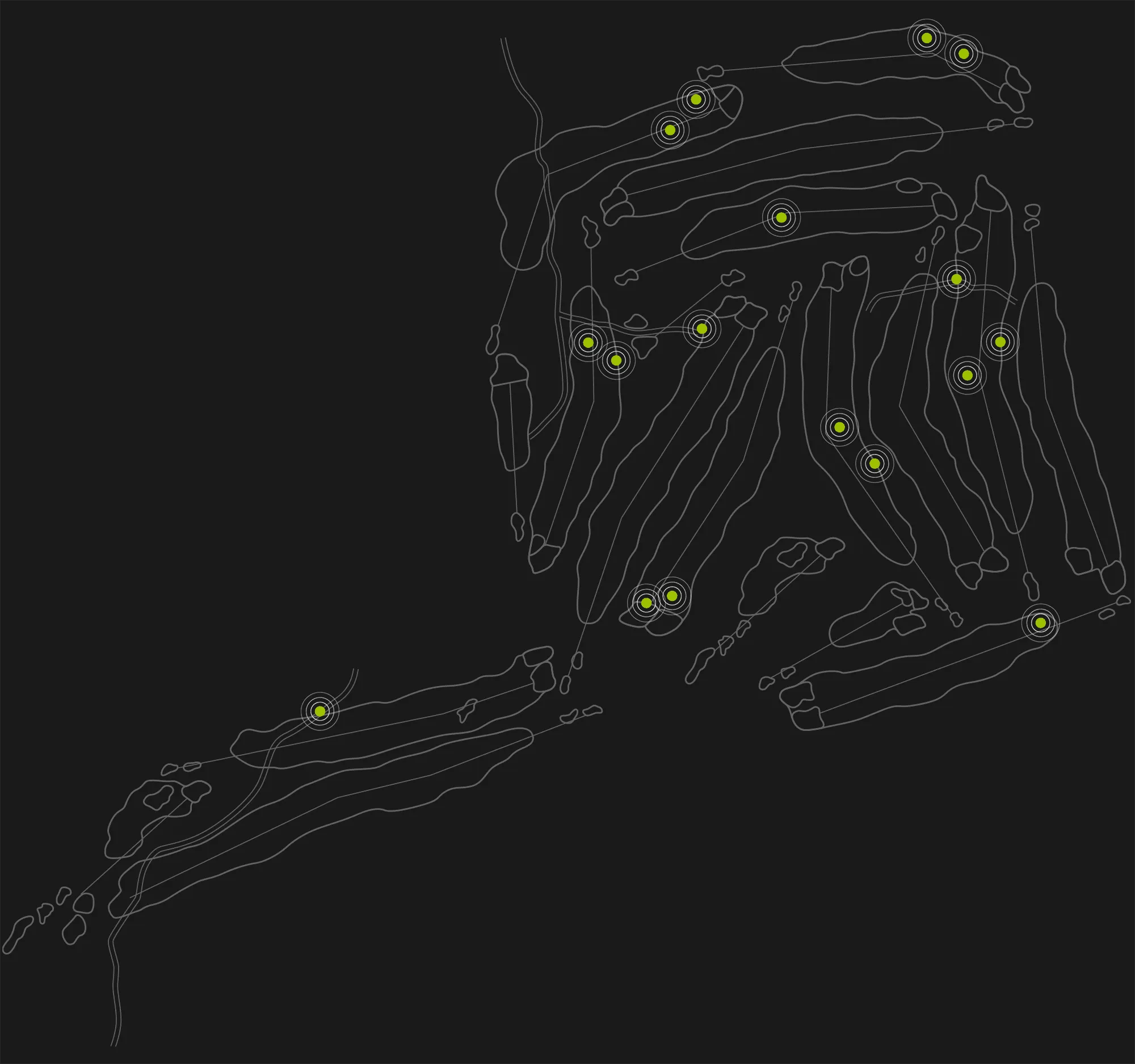
Precision GPS turns that from a drive around the course into a check of a screen. Staff can see every cart on the property at dusk without walking or driving out to look. A message can go to a cart screen telling a late group to wrap up, instead of sending a staff member out in a cart to deliver it in person. Our guide on how GPS accuracy changes what rangers can actually do covers this in more detail. FAIRWAYiQ never locks carts or shuts them down, and we would discourage any system that tries to. A message, a warning as a cart approaches a restricted zone and an alert to staff if it crosses one do the job without the pushback that comes from forcing a golfer to a stop.
What to require from a GPS vendor
If you are evaluating GPS for this problem, require a written, contractual accuracy guarantee with a number and a test method. Verbal assurances do not count.
Standard GPS drifts 6 to 16 feet. A cart path is 8 to 10 feet wide. That gap is the difference between knowing a cart is on the path and guessing whether it is on the turf beside it. Our guide on how to evaluate any golf cart GPS accuracy claim lays out the exact questions to ask before you sign anything.
Building the business case with one champion first
For a municipal course, start with one champion, someone in the parks department or on the council who already sees the end-of-day problem. Walk that person through the numbers, then help them bring the case to the other members one at a time before the vote.
Connect that champion to peer references at other municipal or daily-fee courses running the same system, so they hear the case firsthand from another operator. A vendor can help pull together the ROI case from your own past labor and cart-return records; with the AI tools every vendor should be using today, organizing that history is easy. The real work is fast-tracking the department's understanding of the value so they can move quickly. Our guide on building the 2027 case for cart GPS at a daily-fee course walks through that process.
The labor case itself is straightforward. FAIRWAYiQ courses save an average of $14,000 a year without cutting staff, and $40,000+ for courses that eliminate rangers and repurpose junior golf professional staff onto the interactions technology can't handle.
What to do this week
- Set the last bookable tee time from the current sunset and retire the summer default.
- Put a recurring reminder on the calendar to review that cutoff every couple of weeks through the fall.
- Write down, in plain language, what a twilight golfer can realistically finish, and post it where staff check people in.
- Name one person who owns the close each night: checking the course, confirming who is out, and talking to late groups.
- Before the shop closes, confirm every cart's location, get the fleet back, and get it charged for the morning.
Where FAIRWAYiQ fits
FAIRWAYiQ is an independent GPS provider that works with any cart brand, and our Precision GPS is built on RTK corrections. At dusk, staff can see every cart on a screen instead of driving the course to find them, and a cart-screen message can reach a late group directly. We do not lock or stop carts. We show staff where they are and let a person decide what to do next.
If your close is still a guess every night this fall, book a call with Mike.
Revolutionize Your Golf Operations with FAIRWAYiQ
Unlock the power of data analytics to optimize your golf course management