Precision GPS for Golf Carts: Lessons from Agriculture
How Proven Agricultural GPS Principles Improve Golf Cart Management
Short Answer
Precision GPS - long used in agriculture to control equipment behavior with high consistency - offers a more reliable approach to golf cart management than standard GPS. By improving accuracy and repeatability, precision positioning enables tighter boundaries, fewer false alerts, better turf protection, and a smoother experience for golfers and staff.
The Challenge Golf Courses Face
Golf courses must balance two competing priorities:
- Protecting valuable turf, especially during wet or high-traffic conditions
- Delivering a positive golfer experience, without excessive alerts or enforcement
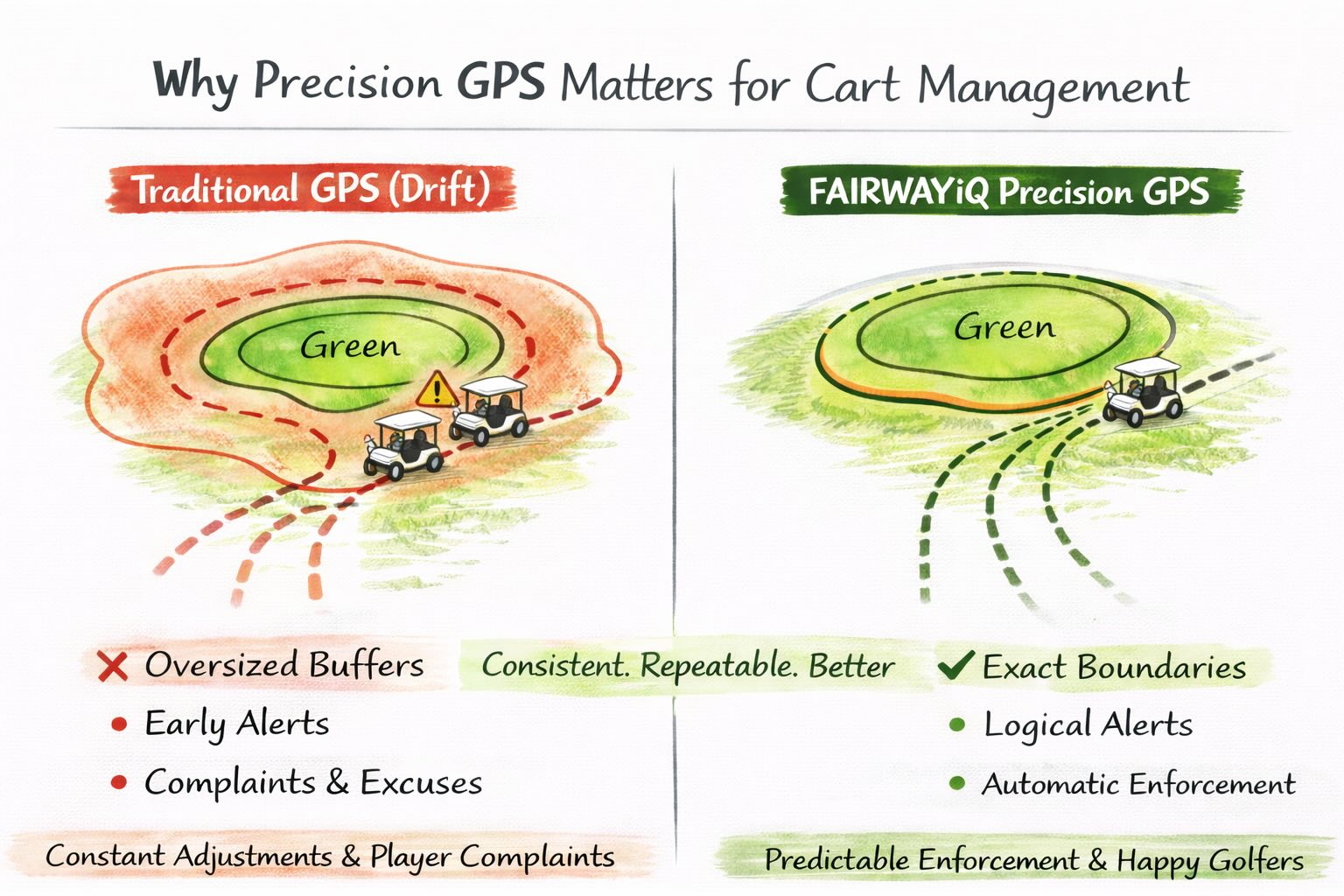
Traditional golf cart GPS systems often force a tradeoff between these goals. Limited accuracy and inconsistent positioning behavior make it difficult to enforce cart rules cleanly, leading to oversized buffers, false alerts, and golfer frustration.
In practice, the issue isn’t just location accuracy - it’s predictable behavior.
The Proven Model: Precision GPS in Agriculture
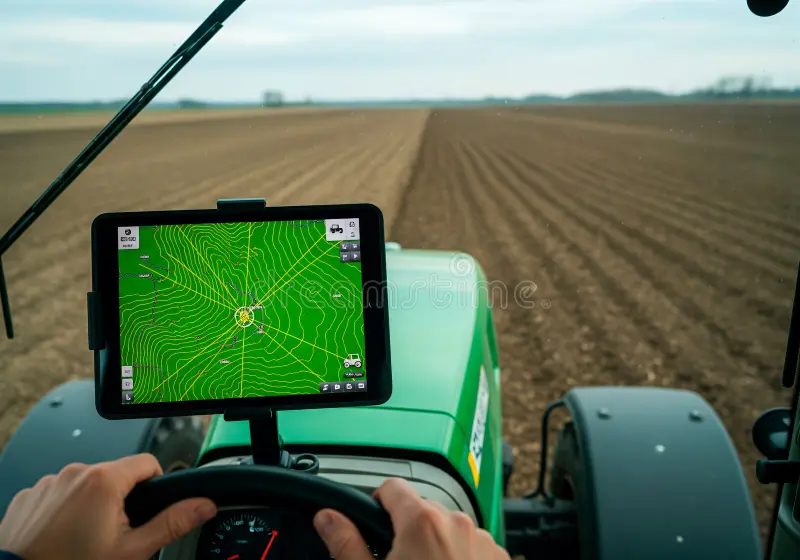
Modern farming relies heavily on precision GPS to guide equipment accurately across large, valuable areas with tight boundaries. These systems combine:
- Satellite positioning
- Correction signals
- Onboard sensors
Together, they deliver stable, repeatable positioning that operators can rely on day after day.
Farmers value precision GPS because it:
- Produces consistent results
- Reduces waste and overlap
- Lowers operator fatigue
- Enables reliable automation
Once adopted, precision GPS becomes foundational to daily operations.
A Shared Challenge: Farms and Golf Courses
While farms and golf courses differ in scale, they share important characteristics:
- Valuable, sensitive surfaces
- Equipment moving continuously
- Tight boundaries where errors matter
- High cost of damage
- A need for consistent behavior
In both environments, accuracy alone isn’t enough. Inconsistent behavior creates operational friction, regardless of how advanced a system claims to be.
Why Standard GPS Falls Short on Golf Courses
Standard GPS systems typically vary by several feet due to:
- Tree cover
- Terrain changes
- Environmental conditions
- Signal drift
On a golf course, this variation forces systems to rely on oversized buffer zones to avoid false enforcement.
The result:
- Alerts that trigger too early or too late
- Golfer confusion and frustration
- Increased staff intervention
- Cart rules that feel arbitrary rather than intentional
Over time, inconsistency erodes trust and creates friction without reliably protecting turf.
Applying Precision Positioning to Golf Cart Management
Precision positioning principles address these challenges by focusing on:
- Accurate boundary definition
- Repeatable alert locations
- Stable positioning on uneven terrain
- Clear, player-friendly communication
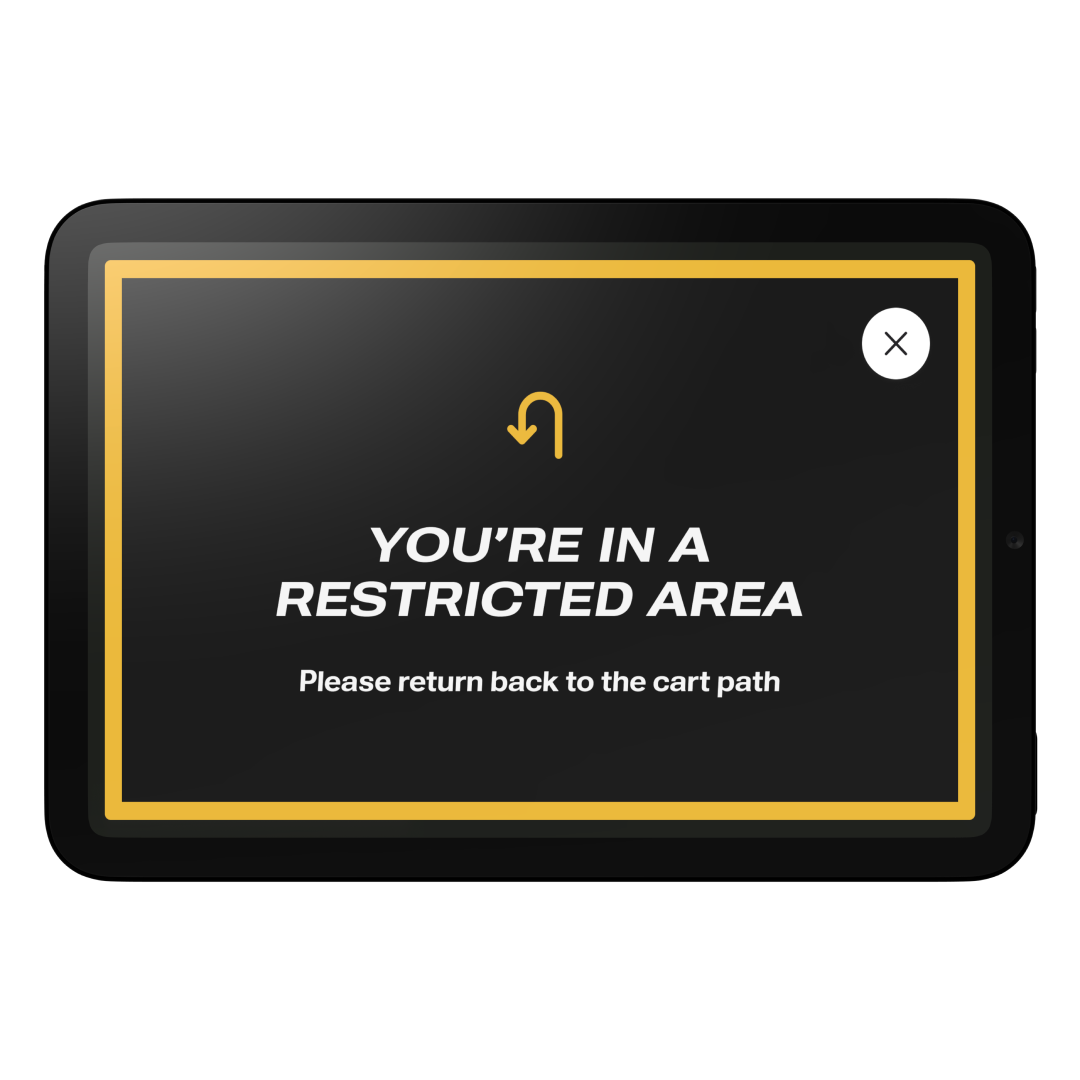
When cart behavior is predictable, courses can enforce policies with greater confidence - without disrupting pace of play or golfer enjoyment.
Benefits for Course Operators
- Improved turf protection
- Fewer cart-related complaints
- Less reliance on manual enforcement
- Better alignment between policy and actual behavior
- More reliable operational data
Benefits for Golfers
- Fewer false alerts
- Clear, predictable expectations
- Minimal interruption to play
- Enforcement that feels fair and logical
When technology behaves consistently, golfers stop noticing it - and that’s the goal.
Final Thought
Precision GPS transformed agriculture by delivering accuracy, consistency, and efficiency at scale. Applying those same principles to golf cart geofencing allows courses to protect what matters most without compromising the golfer experience.
For courses evaluating cart management and geofencing systems, consistency should be a core requirement—not a bonus feature.
Related Posts
Precision GPS for Golf Carts: Lessons from Agriculture
Golf Cart Geofencing
Precision GPS for Golf Carts
Revolutionize Your Golf Operations with FAIRWAYiQ
Unlock the power of data analytics to optimize your golf course management